

Ads can buy you views. But the moment you stop paying, the views stop too.
Organic traffic is different. It's the free views YouTube sends you every day, for months or even years after you post.
So where do those views come from? And how do you get more of them?
Here are 11 simple ways to grow your organic traffic on YouTube in 2026, based on how YouTube actually recommends videos.
What Is Organic Traffic on YouTube?
Organic traffic is every view you don't pay for.
Someone searches for a topic and finds your video. YouTube shows your video on their Home page. Your video plays next after another one. A friend shares the link. All of that is organic.
Paid traffic is the opposite. It comes from Google Ads or from paying someone to promote your video.
Organic viewers are usually the best viewers you can get. They chose your video because it looked like exactly what they wanted. So they watch longer, comment more and subscribe more often.
Where Organic Views Come From
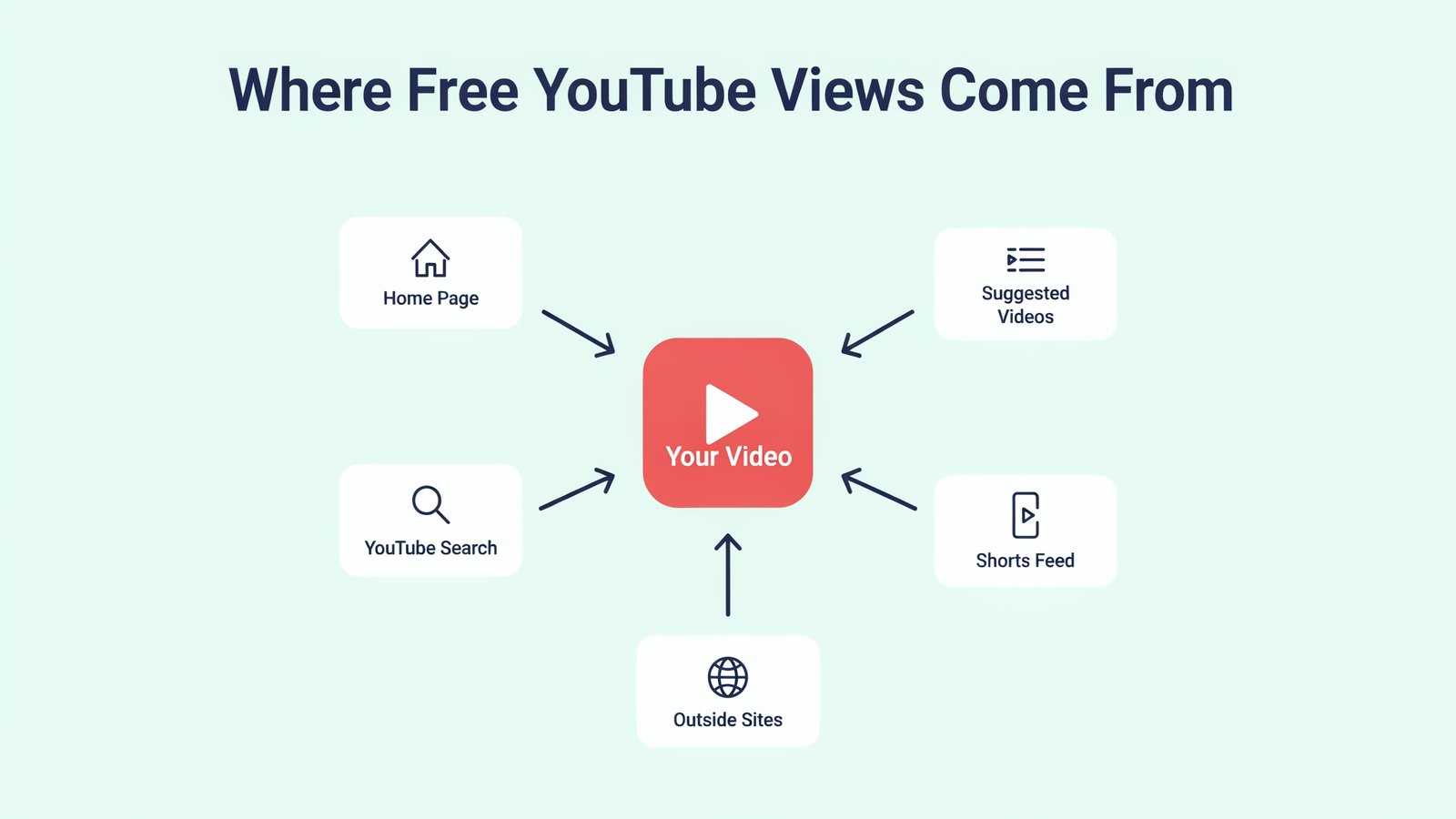
Open YouTube Studio, go to Analytics and click the Content tab. You'll see a section called traffic sources. For most channels, nearly all the free views come from five places.
| Traffic Source | Where Viewers See You | What Helps Most |
|---|---|---|
| Browse features | The Home page and Subscriptions feed | Strong titles, thumbnails and watch time |
| Suggested videos | Next to and after other videos | Topics that match popular videos in your niche |
| YouTube search | Search results | Keywords people actually type |
| Shorts feed | The vertical swipe feed | A strong first second and a reason to rewatch |
| External | Google, social media, websites, email | Sharing and embedding your videos |
Here's the important part. YouTube has said many times that its system follows the viewer, not the video. It tries to show each person the videos they're most likely to watch and enjoy.
So every tip below comes back to one question. Will the right person click this, and will they be glad they did?
How to Read Your Traffic Sources Report
Before you change anything, look at where your views come from today. It takes two minutes.
Mostly search? Your topics are good and people find you on purpose. Now work on titles, thumbnails and end screens so YouTube starts recommending you too.
Mostly browse and suggested? YouTube already likes your videos. Keep making more videos on the topics that worked, and add playlists so viewers stay longer.
Mostly Shorts? You're reaching new people, but they may not know your long videos exist. Link every Short to a full video.
Hardly any external? That's normal, and it's an easy win. Share each video in the places your audience already spends time.
Check the report again a month later. You'll see exactly which changes moved the needle.
11 Ways to Get More Organic Traffic on YouTube
1. Pick Topics People Already Want
The easiest views come from topics people are already looking for.
Type your topic into the YouTube search bar and look at the suggestions that drop down. Those are real searches. Look at the most popular videos in your niche from the last few months too. If a topic got big views for someone else, there's demand for it.
Then make your own version. Better, clearer, more up to date, or for a more specific audience.
A tool like Tuberank Jeet speeds this up. It shows related searches, how much traffic each can bring and how hard each will be to rank for.
2. Make the Click Easy
No click means no view. And no view means YouTube stops showing your video.
Your title and thumbnail are your shop window. The title should promise one clear result. The thumbnail should show it with one big image and a few words at most.
YouTube Studio now has a Test and Compare feature. You can upload up to three thumbnails, and on many channels three titles too, and YouTube shows each to different viewers and picks the one people watch most. Use it on every important video.
3. Keep the Promise in the First 30 Seconds
The first 30 seconds decide whether people stay.
Skip the long intro, the logo animation and the "hey guys, welcome back." Show the result or the problem right away, then tell viewers what they'll get by the end.
Check the audience retention graph in YouTube Studio. If there's a big drop at the start, your opening doesn't match what the title promised.
4. Help YouTube Understand Your Video
Search is the source you control most. If people search for it, you can show up for it.
Use your main keyword in the title, say it out loud early in the video, and put it in the first two lines of the description. Add chapters and accurate captions. Those help YouTube understand every part of your video.
We covered this in detail in our guide on how to optimize a YouTube video for search, step by step.
5. Win the Suggested Videos Spot
Suggested videos are often the biggest free traffic source of all. They're the videos that show up next to and after the one someone is watching.
To show up there, make videos that fit naturally with popular videos in your niche. If a big channel's video about "beginner home workouts" is getting huge views, a video on "the best stretches after a beginner workout" is the perfect next watch.
Use similar words in your title and tags, so YouTube can see the connection. And end your videos well, because a video that keeps people on YouTube gets recommended more.
6. Turn One Video Into a Binge
When someone watches one of your videos, you want them to watch three.
Group your videos into playlists by topic. Add end screens that point to the next video in the series. Say it out loud too. "If you liked this, the next video shows you how to..."
Longer viewing sessions are a strong signal. They tell YouTube that your channel is worth recommending.
7. Use Shorts as a Free Ad for Your Long Videos
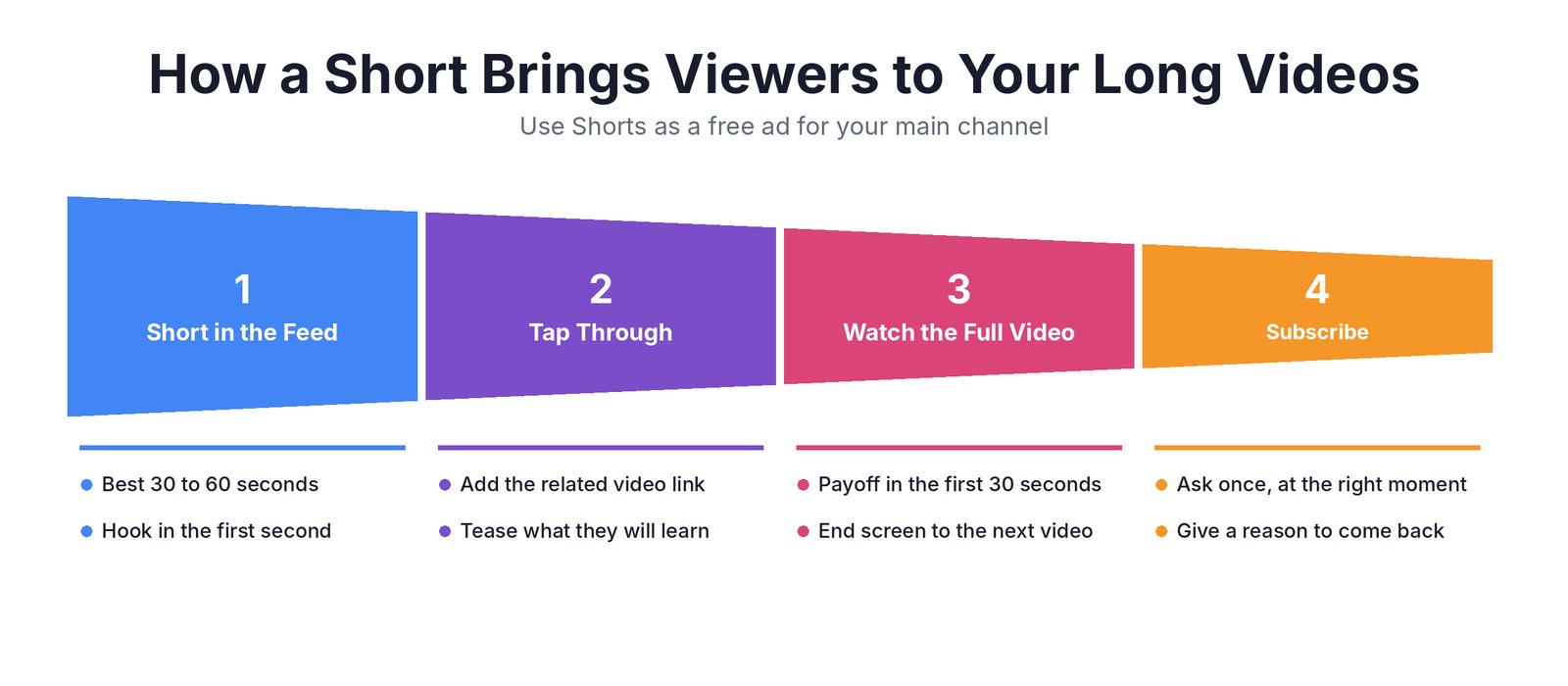
Shorts reach people who have never heard of you. Use that.
Cut a 30 to 60 second moment from a long video. The best tip, the funniest moment or the biggest surprise. Then link the full video from the Short using the related video option.
Some of those viewers will tap through and watch the long version. That's free, targeted traffic for your main videos.
Make the first second count. In the Shorts feed, people decide almost instantly whether to keep watching.
8. Post on a Schedule You Can Keep
You don't need to post every day. You need to post steadily.
One good video a week beats three rushed ones followed by a month of silence. A steady schedule trains your subscribers to come back, and it gives YouTube a steady stream of new videos to test with new viewers.
Batch your work. Research four topics in one sitting, film two videos in one day, edit on another. It's far easier to stay consistent that way.
9. Talk to Your Viewers
Comments are free research and free engagement.
Reply to comments in the first hour after you post. Pin a comment with a question. Use the Community tab or Posts to run polls between uploads.
Your comments section also tells you what to make next. When three people ask the same question, that's your next video.
10. Team Up With Other Creators
Collaborations put you in front of a whole new audience that already trusts the other creator.
Look for channels about the same size as yours, in a related niche. A guest spot, a joint video or a simple shout-out can all work. YouTube now lets creators list collaborators on a video, so both channels get credit and the video can reach both audiences.
Start small and be generous. Offer to help them first.
11. Bring Views From Outside YouTube
External traffic is a signal that people value your video. And it's traffic you'd never get otherwise.
- Google search. Videos often show up in Google results. A clear title and chapters help.
- Your blog or website. Embed your videos in related posts. Every reader is a possible viewer.
- Your email list. Send each new video to your subscribers.
- Social media. Share a short clip with a link, not just a bare link.
- Forums and communities. Answer questions and share a video only when it truly helps.
Don't buy views or use view exchange sites. Fake views can hurt your channel and break YouTube's rules.
A Simple Weekly Routine for Organic Growth
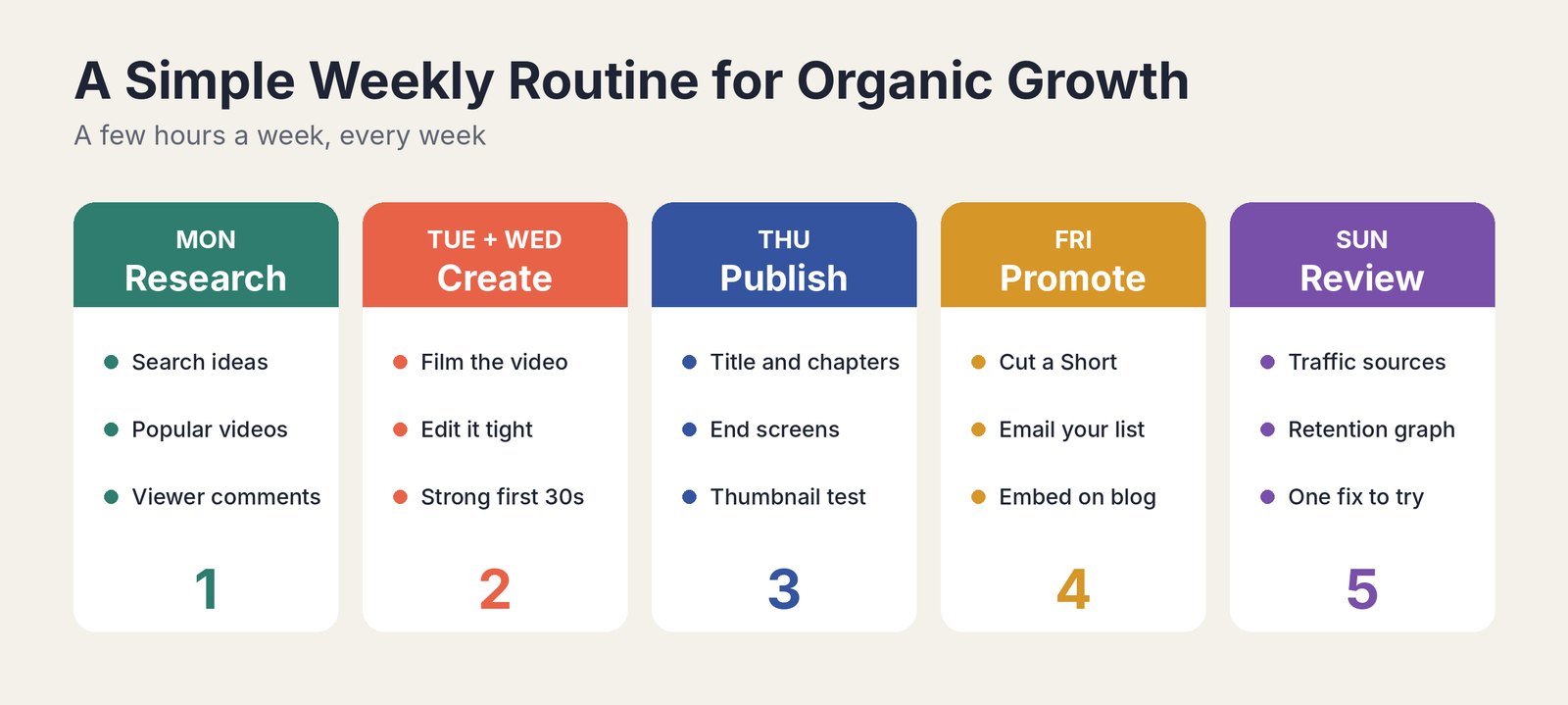
Tips are great. A routine is what actually grows a channel. Here's one that takes a few hours a week.
- Monday, research. Pick next week's topic. Check search suggestions, popular videos in your niche and your comments.
- Tuesday and Wednesday, create. Film and edit. Put the payoff in the first 30 seconds.
- Thursday, publish. Write the title and description, add chapters, set up end screens and start a thumbnail test.
- Friday, promote. Cut a Short, post to social media, email your list and embed the video on your blog.
- Sunday, review. Check traffic sources and retention for last week's video. Note one thing to do better.
How Tuberank Jeet Helps

Most of the work above is research. Finding the right topic, the right keywords and the right gap to fill.
That's what Tuberank Jeet does for you. It's AI-powered desktop software for Windows and Mac that we built for our own channels.
- Finds topics and keywords with real traffic and shows how hard each is to rank for
- Shows the ranking potential of a video idea before you film it
- Breaks down the top videos for any search, with their titles, tags and stats
- Reads viewer sentiment so you know what people care about
- Gives you an AI ranking recipe with helper keywords
- Writes titles, descriptions, tags and hashtags in one click
- Uploads straight to YouTube from the app
We use it on our own channel Twominenglish, which passed 265,000 subscribers.
Tuberank Jeet costs just $5.58 a month, paid yearly ($67 a year), or $6.99 month to month. There's a free version to try first and a 30 day refund guarantee.
Comparing your options? See our list of the best YouTube SEO tools.
Mistakes That Kill Organic Traffic
Clickbait. A title that overpromises gets clicks and then loses viewers fast. YouTube notices.
Changing topics every week. If your channel is about cooking one week and cars the next, YouTube can't tell who to show it to.
Deleting videos that flopped. A slow video can still pick up views later. Fix the title and thumbnail instead.
Ignoring your analytics. Traffic sources and retention tell you exactly what to fix. Look at them every week.
Buying views or subscribers. It doesn't work, and it can get your channel in trouble.
Frequently Asked Questions
How long does it take to get organic traffic on YouTube?
Most new channels see slow growth for the first few months. Search traffic can start within days if you pick low competition topics. Browse and suggested traffic usually grow once you have a few videos that keep people watching.
Do I need a lot of subscribers to get organic views?
No. YouTube recommends videos to people based on what they like to watch, not just on your subscriber count. Small channels get recommended all the time when a video is a great match.
Are Shorts or long videos better for organic traffic?
Both help in different ways. Shorts reach new people quickly. Long videos build watch time and loyal viewers. The best approach is to use Shorts to point people to your long videos.
Does uploading more often get more views?
Only if quality stays high. A steady schedule you can keep is better than posting a lot of weaker videos.
What is the fastest way to get organic views on a new channel?
Target specific search topics with low competition. They bring steady views even when nobody knows your channel yet. Read our guide on how to increase YouTube subscribers for the next step.
Final Thoughts
Organic traffic on YouTube isn't luck.
It comes from picking topics people want, earning the click, keeping the promise and making it easy to watch the next video.
Do that week after week and the views keep coming, without a single ad.
Want to find the right topics and keywords in minutes? Try Tuberank Jeet for just $5.58 a month, paid yearly.