Why does one video sit on page one of YouTube search for years while another, just as good, never shows up?
It isn't luck. YouTube is quite open about what it looks at, and once you know the ranking factors, YouTube SEO stops feeling like guesswork.
This guide covers how YouTube ranks search results in 2027, the YouTube SEO tools worth using, and how to track the ranking of your YouTube videos for free.
How Does YouTube Rank Search Results?
YouTube is one of the biggest search engines in the world. Billions of searches happen on it every month, and every one is someone asking a question.
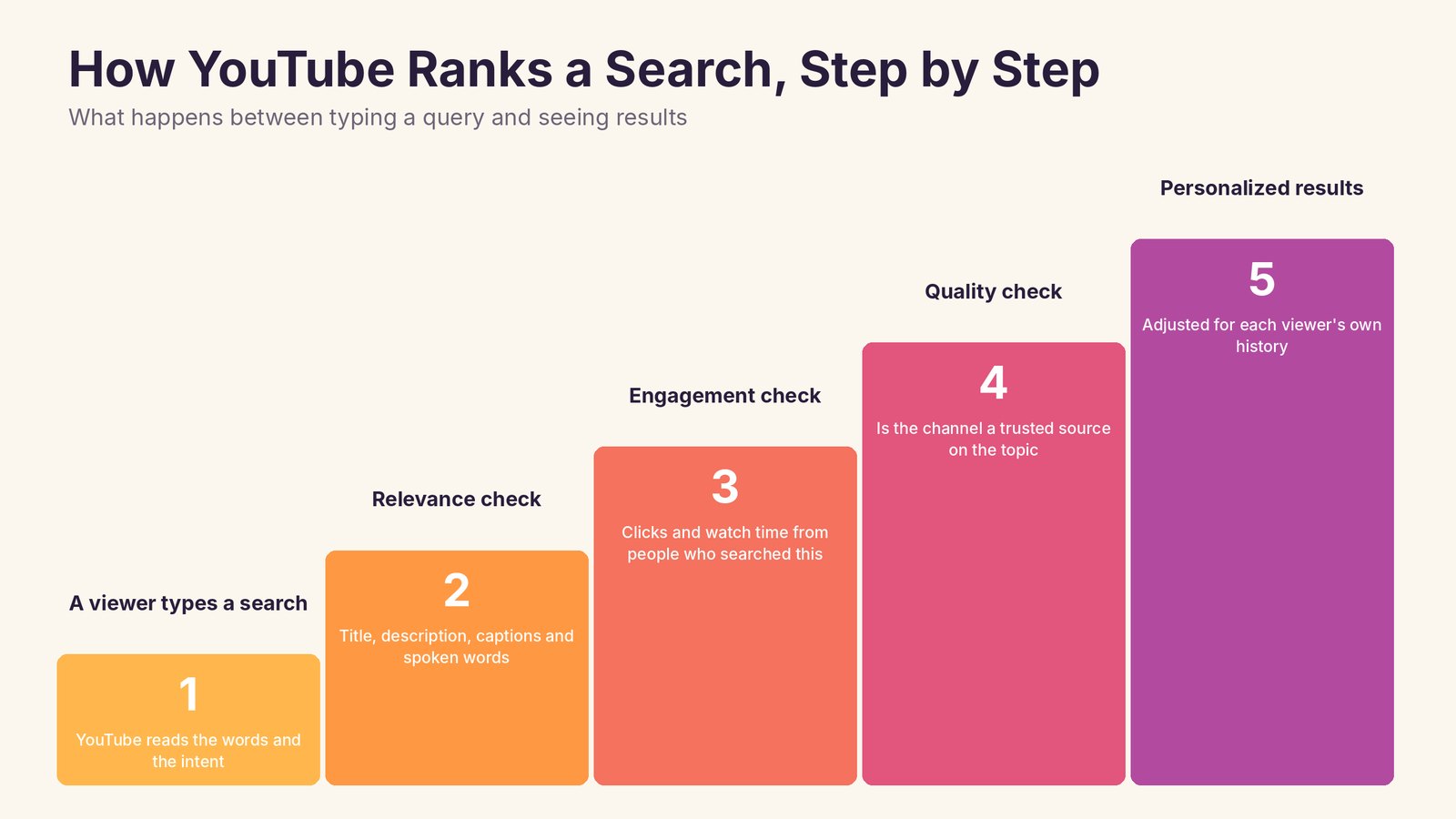
When a search comes in, YouTube first looks for videos that match the words and the intent. Then it checks how people who searched for something similar responded to those videos. Then it weighs how trustworthy each channel is on the topic. Finally, it shuffles the order a little for each viewer based on what they usually watch.
That's YouTube search engine ranking in one paragraph.
Google shows YouTube videos in its own results too, so a video that ranks well on YouTube often picks up Google traffic as a bonus.
Search and Recommendations Are Two Different Games
When someone types a query, YouTube tries to find the best answer to that question. When someone opens the home page or sees "Up next", YouTube is guessing what they'd enjoy based on their own viewing habits.
The signals overlap. But search starts with words, and recommendations start with the viewer.
This guide focuses on search, because that's where you have the most control. Videos that do well in search often get picked up by recommendations later anyway.
The 4 YouTube Ranking Factors in 2027
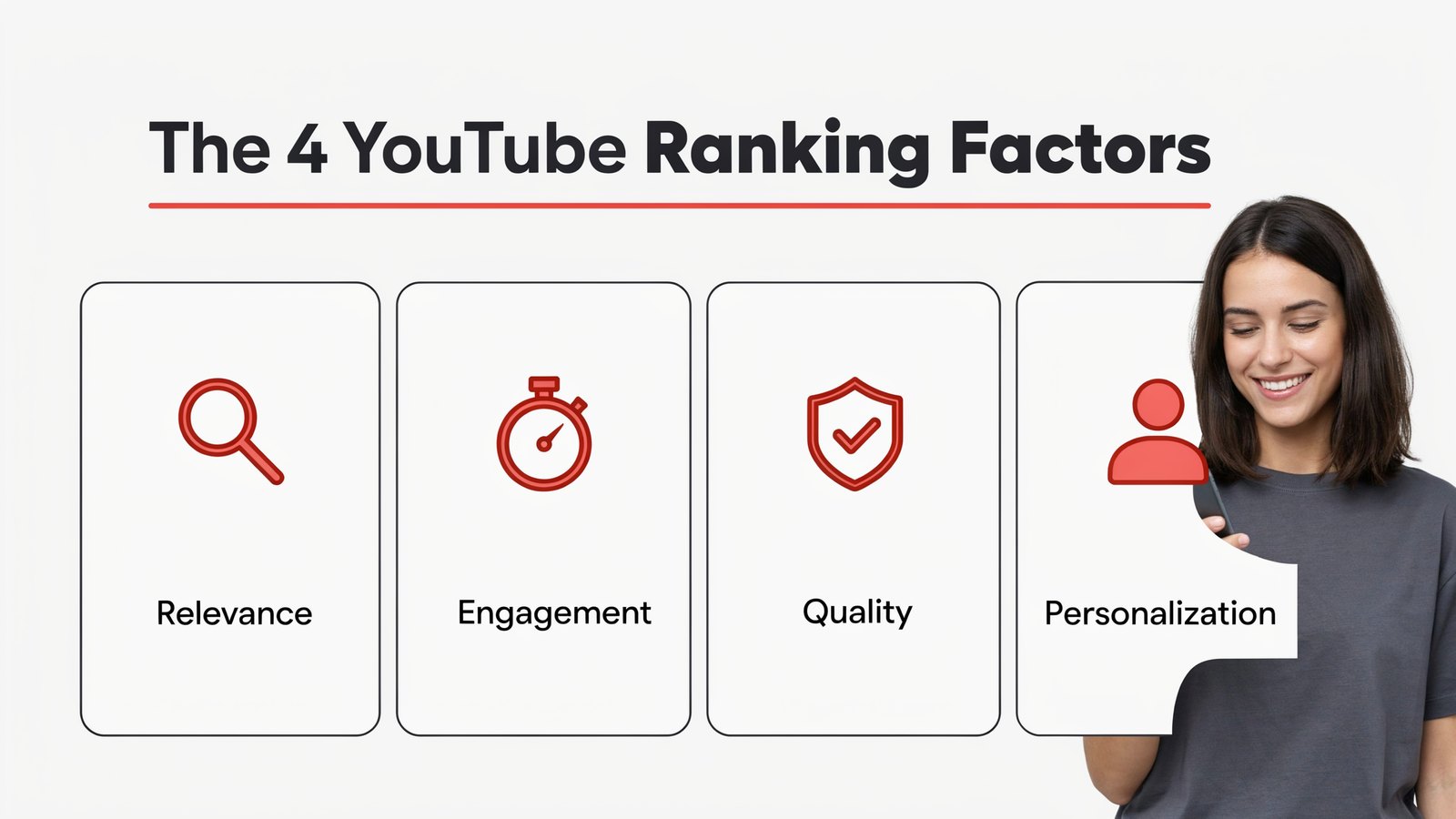
YouTube says its search system looks at three main things. Relevance, engagement and quality. On top of that, results are personalized for each viewer.
Let's take them one at a time.
1. Relevance
Does your video match what the person searched for?
YouTube works this out from your title, description, tags and the video itself, including what you actually say. That's why vague titles hurt you. "My new video!!" tells YouTube nothing.
Relevance is the entry ticket. Without it, your video doesn't even get considered.
2. Engagement
Do people who find your video actually like it?
YouTube looks at signals like how long viewers watch after searching for a particular phrase. If people click and leave after ten seconds, that's a bad sign. If they watch most of it, that's a great one.
Engagement separates two equally relevant videos. It's also the one factor you can't fake.
3. Quality
Is your channel a trustworthy source on this topic?
YouTube tries to spot channels that show expertise, authority and trustworthiness. This matters most for news, health and money topics, where bad information can do real harm.
For most creators, quality builds up over time. Stay consistent in your niche, be accurate and don't mislead people.
4. Personalization
Two people can search the exact same phrase and see different results.
YouTube considers each viewer's own search and watch history. Someone who watches a lot of beginner cooking videos may see different results for "how to make bread" than a professional baker would.
You can't control this one directly. But you can make each video clearly serve one type of viewer, so YouTube knows who to show it to.
YouTube SEO Ranking Factors at a Glance
Those four factors are the big picture. Day to day, they show up as specific signals you can see and change.
| Signal | Ranking Factor | Who Controls It |
|---|---|---|
| Title | Relevance | You |
| Description and chapters | Relevance | You |
| Spoken words and captions | Relevance | You |
| Thumbnail | Engagement | You |
| Click-through rate | Engagement | Viewers |
| Watch time and retention | Engagement | Viewers |
| Likes, comments and shares | Engagement | Viewers |
| Channel track record | Quality | You, over time |
| Viewer history | Personalization | Nobody |
Notice something? Only some of these happen before you hit publish. The rest depend on how viewers respond.
What's Changing in YouTube Search Engine Ranking in 2027
The basics haven't moved, but YouTube search keeps getting smarter.
AI understands your video better. YouTube can read what's said and shown in a video far better than it could a few years ago. Clear speech and accurate captions help it match your video to the right searches.
More languages, more viewers. With auto-dubbing, one video can reach people who search in other languages. That opens up whole new audiences for small channels.
Shorts and long videos side by side. Search results mix Shorts with regular videos. A Short can be a doorway to your longer content.
Chapters show up in results. Good chapter titles can make a single section of your video appear for a specific search.
The lesson? Make it easy for YouTube to understand exactly what's in your video, and it will find the right people for you.
What You Control and What You Don't
You fully control your topic, title, description, chapters, tags, captions and thumbnail. Get those right every time. They're free wins.
You can only influence watch time, engagement and authority. You do that by making a video that delivers on its promise quickly and keeps people interested.
You can't control personalization, your competitors or how YouTube changes its systems.
So spend your energy on the first two groups. Stop worrying about the third.
YouTube SEO Myths That Waste Your Time
A lot of YouTube SEO advice is outdated or simply wrong. Here are the ones I hear most.
"Tags are the secret." They aren't. YouTube says tags play a minimal role and are mainly useful for commonly misspelled words.
"More keywords means more rankings." Stuffing your title and description makes them harder to read and can break YouTube's spam rules. One clear topic per video works better.
"You need a big channel to rank." Small channels rank all the time, especially for specific searches that big channels don't bother with.
"Longer videos always rank higher." A tight eight-minute video that people finish can beat a padded thirty-minute one that people abandon.
"There's a trick to beat the algorithm." The algorithm follows viewers. Help viewers, and you're working with it instead of against it.
How to Rank Higher in YouTube Search
Here's the simple process I follow for every video.
- Pick a topic people search for and that you can realistically rank for.
- Study the videos already ranking. What do they cover? What do they miss?
- Write a clear title with your main phrase near the start.
- Use the first two lines of the description to say what the video is about.
- Add chapters with simple, searchable names.
- Upload accurate captions so YouTube understands every word.
- Make a thumbnail that matches the title and earns the click.
- Hook viewers in the first 30 seconds by showing them they're in the right place.
None of this is complicated. The hard part is doing it every single time.
Common Mistakes That Hold Videos Back
Chasing huge keywords. Ranking for "fitness" is close to impossible for a new channel. "Home workout for bad knees" is very doable.
Clickbait that doesn't deliver. It might win the click, but viewers leave fast and YouTube notices.
Long, slow intros. A minute of channel news before the actual content is the quickest way to lose people.
Ignoring old videos. A small title or thumbnail tweak on an older video can bring it back to life.
Jumping between topics. If one week is cooking and the next is crypto, neither YouTube nor your viewers know what you're about.
The YouTube SEO Tools Worth Using
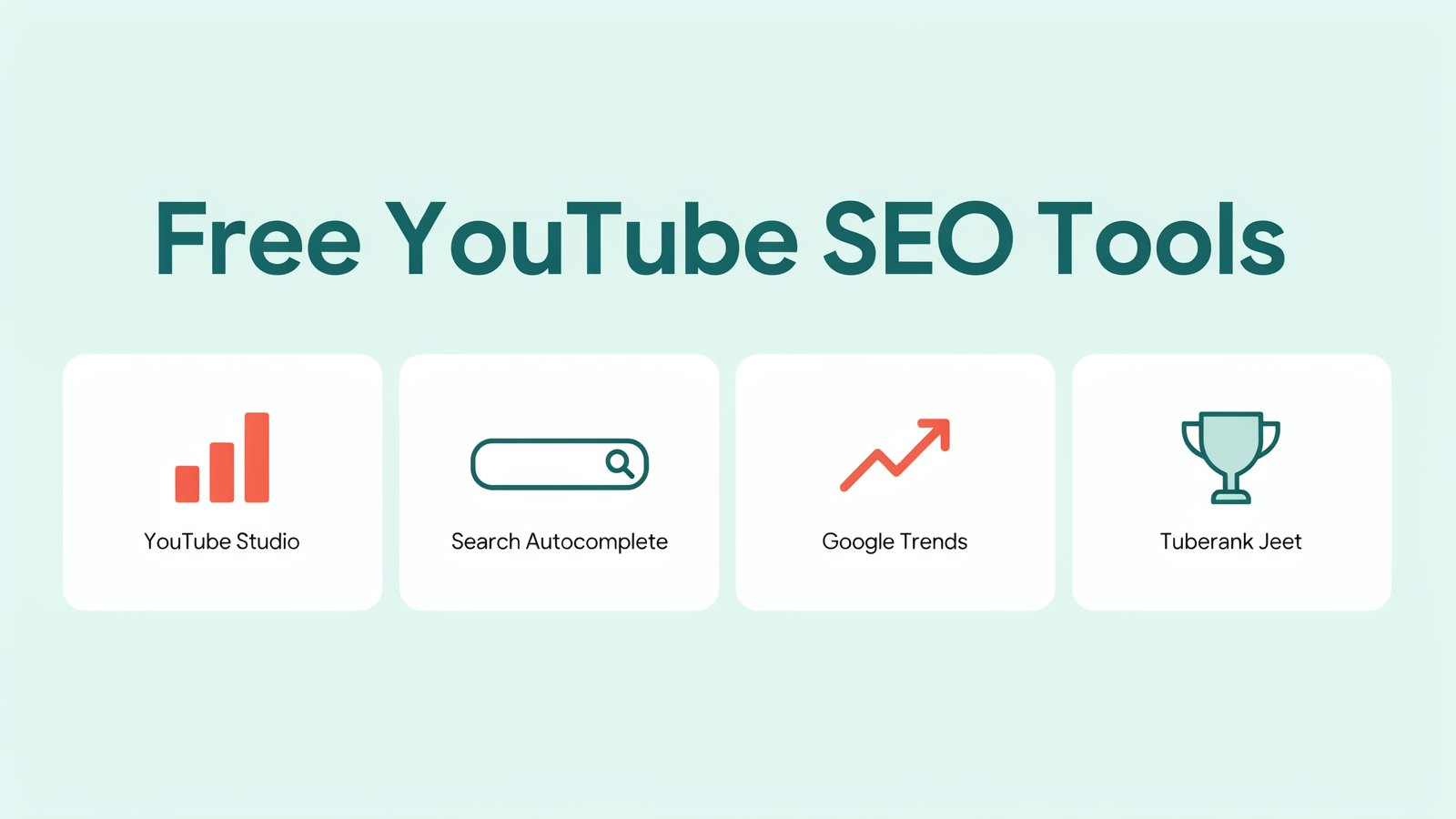
You don't need a stack of paid tools to rank. A few good ones cover everything.
YouTube Studio. It's free and it's the only tool with your real data. The YouTube search report shows the exact phrases people typed before they found your video.
YouTube search autocomplete. Start typing your topic in the YouTube search bar and look at the suggestions. Those are real searches people make, in their own words.
Google Trends. Switch the search type to YouTube search and you can see whether interest in a topic is growing, fading or seasonal.
Tuberank Jeet. This is the one that pulls it all together, from keyword research and competition checks to AI titles, descriptions and tags. More on it below.
The free tools tell you what people want. A dedicated YouTube SEO tool tells you how hard it will be to rank for it, and what to write so YouTube understands your video.
For a full side by side comparison with prices, see our list of the best YouTube SEO tools.
How to Track the Ranking of YouTube Videos
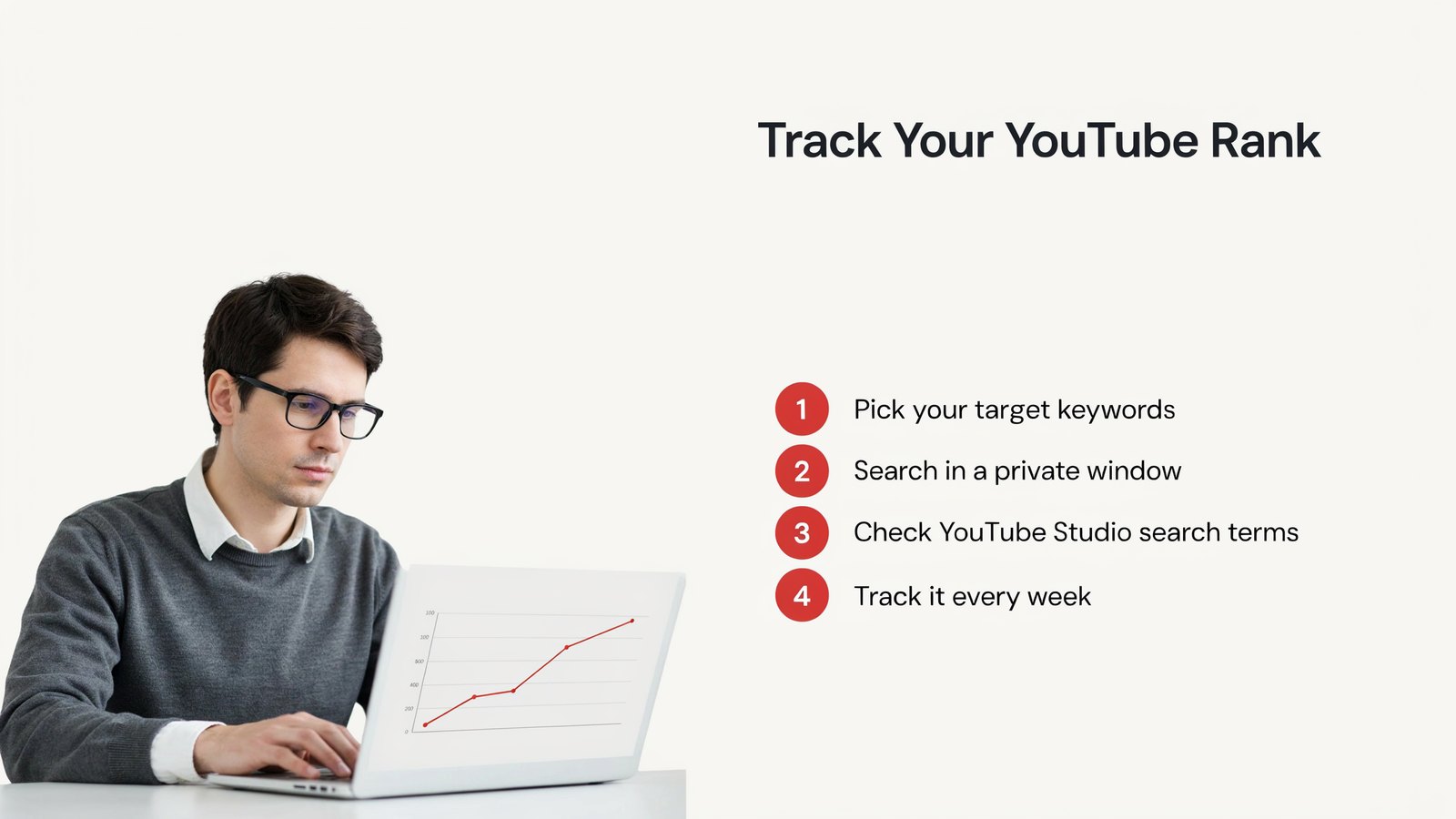
You can't improve what you don't measure. YouTube rank tracking tells you whether your changes are working.
Pick your target keywords. Write down the two or three phrases you want each video to rank for.
Search in a private window. Because results are personalized, your own browser will flatter you. A private window, logged out, gives a more honest view. Note the position of your video.
Check YouTube Studio search terms. Open a video's analytics, go to traffic sources, and click YouTube search. You'll see the exact phrases people used to find it. These are the searches you already rank for, and sometimes they're a nice surprise.
Track it every week. Rankings move, especially in the first few weeks. A simple spreadsheet with the date, keyword and position is enough to spot trends.
Once you have more than a handful of videos, checking by hand gets slow. That's when a YouTube SEO tool earns its keep.
How to Read Your Numbers
Each number in YouTube Studio points to a different ranking factor. Fix the weakest one first.
Almost no search traffic? That's a relevance problem. Is your title clear? Are you targeting something people actually search for?
Search terms don't match your target? Your title and description may be sending the wrong signals.
Lots of impressions but few clicks? Your thumbnail and title aren't convincing enough.
A big drop in the first moments? The video didn't match what the title promised. Tighten the intro.
Rank slipping over time? A newer, better video may have arrived. Update your description, add chapters, or make a fresh version.
How Tuberank Jeet Helps You Rank
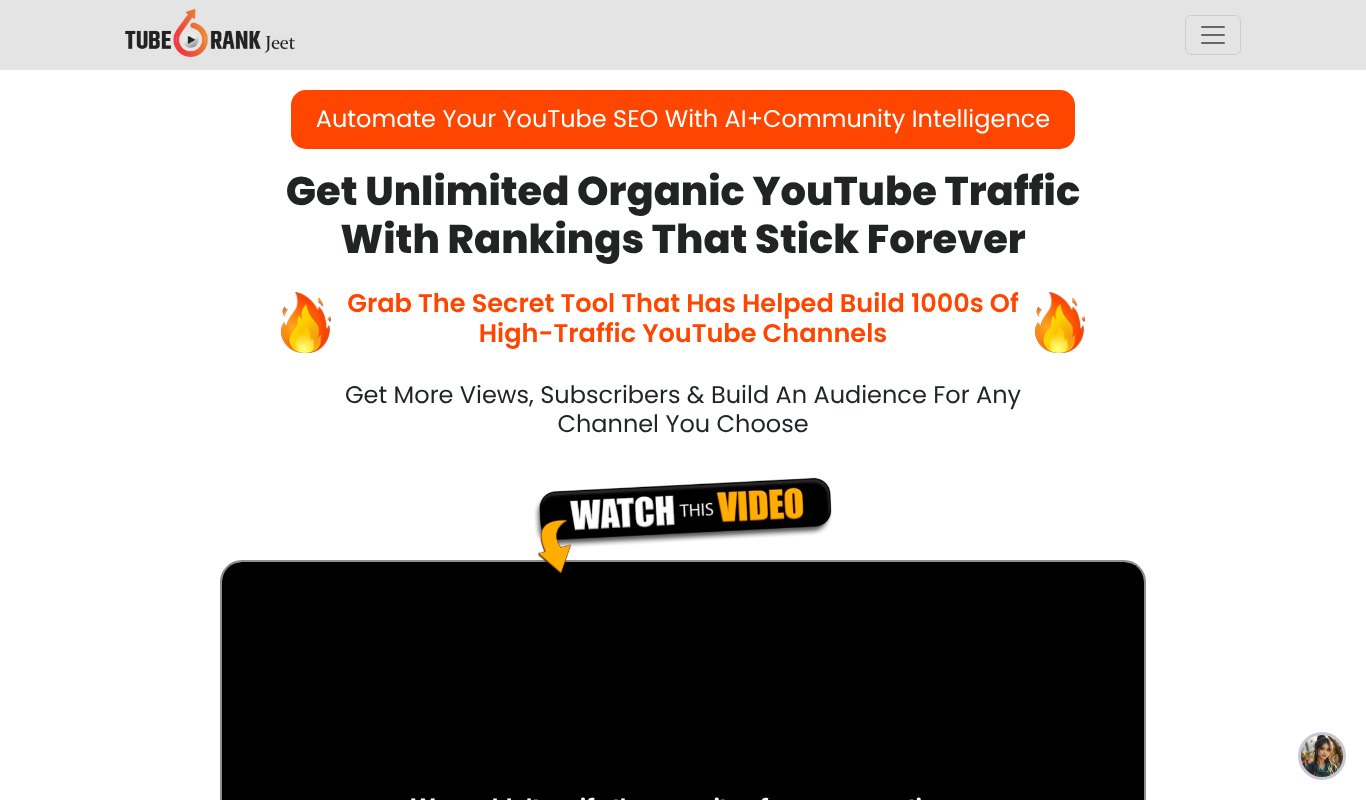
Relevance and research are where most creators lose time. That's exactly what Tuberank Jeet is built for. Full disclosure, it's our own product, made by Teknikforce.
We use it on our own channel too. Two Min English grew past 265,000 subscribers and earned YouTube's Silver Play Button, and its videos are optimized with Tuberank Jeet.
It's desktop software for Windows and Mac. Before you optimize anything, it shows the ranking potential of a keyword, the traffic you can expect and how hard it will be to rank. You can analyze the videos already ranking for your topic and see what you need to beat them.
Then it uses AI plus community intelligence to suggest titles, descriptions, tags and hashtags. You can rewrite them with AI, find keyword alternatives, or use one-click optimization. It supports targeting by language and region, and you can upload videos straight from the app.
There's viewer sentiment analysis too, and you can save your favorite videos, tags and hashtags for quick use.
To be clear, it can't make people watch a weak video. Engagement is still on you. But it takes the guesswork out of everything you control.
Pricing Just $5.58 a month, paid yearly ($67 a year), or $6.99 month to month. There's a 30 day refund guarantee and a free version to try first.
Frequently Asked Questions
What are the main YouTube ranking factors?
Relevance, engagement and quality, with personalization on top. Relevance gets you considered, and engagement decides how high you go.
How does YouTube rank search results?
It finds videos that match the search, checks how viewers who searched something similar responded to them, weighs how trustworthy each channel is, and then adjusts the order for each viewer.
How can I track the ranking of my YouTube videos for free?
Search your target phrase in a private window and note your position, then check the YouTube search report in YouTube Studio to see which phrases bring viewers in. Repeat every week.
What are the best YouTube SEO tools?
Start with the free ones, YouTube Studio, search autocomplete and Google Trends. Add a dedicated tool like Tuberank Jeet when you want keyword difficulty, competition analysis and AI help with titles and descriptions.
Does subscriber count affect search rankings?
Not the way people think. Small channels can and do rank, especially for specific topics. A track record of helpful videos in one niche matters more.
How long does it take to rank on YouTube?
Some videos rank within days, others take weeks as YouTube gathers viewer data. Track your position weekly and give each video at least a month before making big changes.
Final Thoughts
YouTube search engine ranking isn't a mystery. It comes down to relevance, engagement, quality and a layer of personalization on top.
Nail the things you control. Make videos that keep people watching. Track your rank every week and fix the weakest factor first.
Do that consistently and the rankings follow.
And to handle the research and optimization side in minutes, try Tuberank Jeet.